Observe, optimise & protect hosted agents on Microsoft Foundry
Auto-generated evaluators, trace-linked analysis, adaptive red-teaming — moving multi-agent systems from prototype to production with Foundry Observability.
Read on GitHub →I’m a pre-sales solutions engineer who treats the field as a craft. Discovery, architecture, demos that survive scrutiny, immersions that ship code on the day, and a product-minded lens that turns customer evidence back into product input.
Currently Solutions Engineer at Microsoft · ex-LaunchDarkly · ex-GitHub · Sydney since 2009
The through-line of more than fifteen years in Sydney: I help engineers become more capable — open-source contributors, platform teams, enterprise crews shipping AI for the first time. — operating thesis
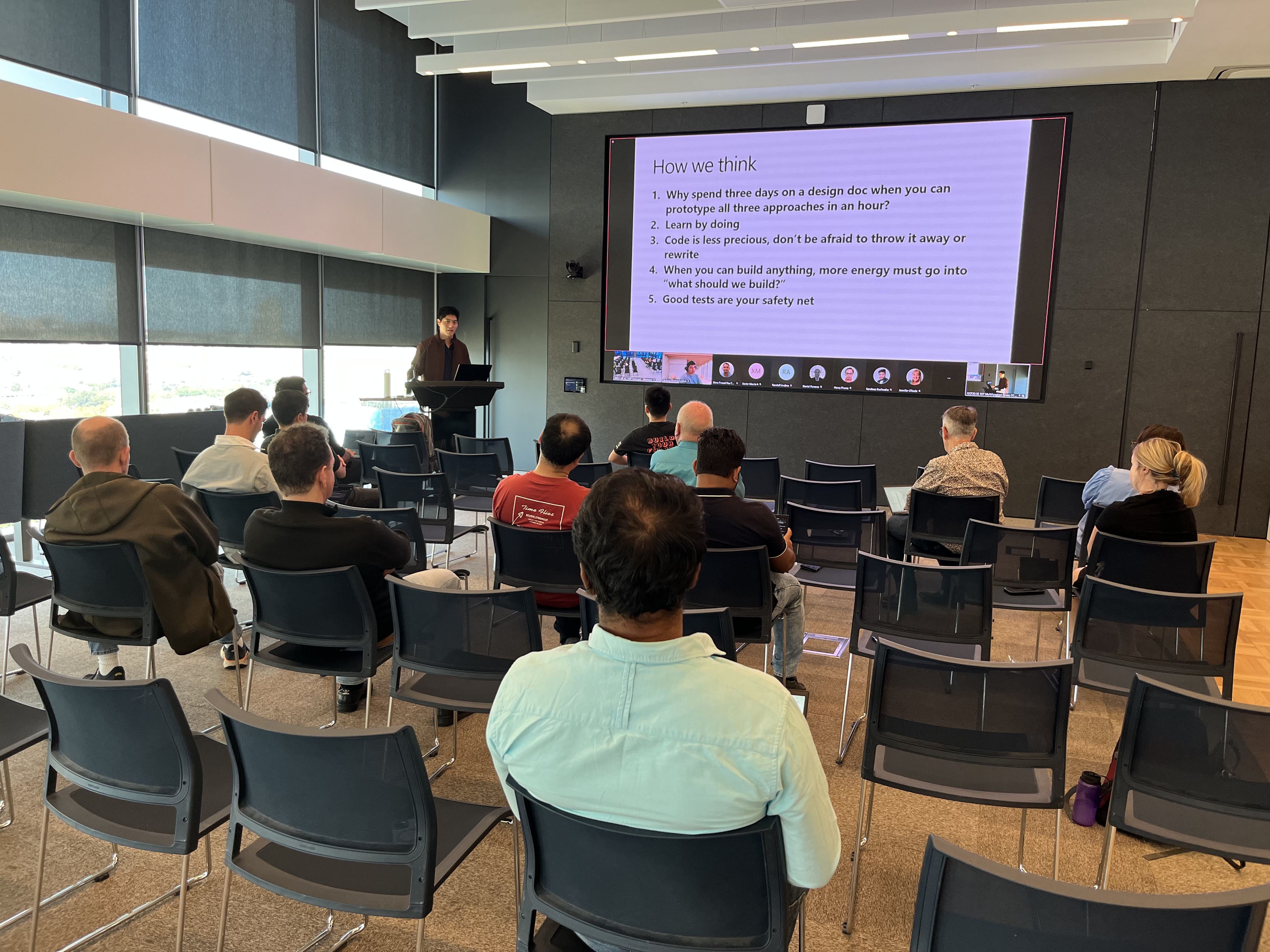
Hands-on enterprise immersions, hackathon kick-offs, developer days, intimate co-design sessions and 200-seat keynotes — selected moments from work across Australia.
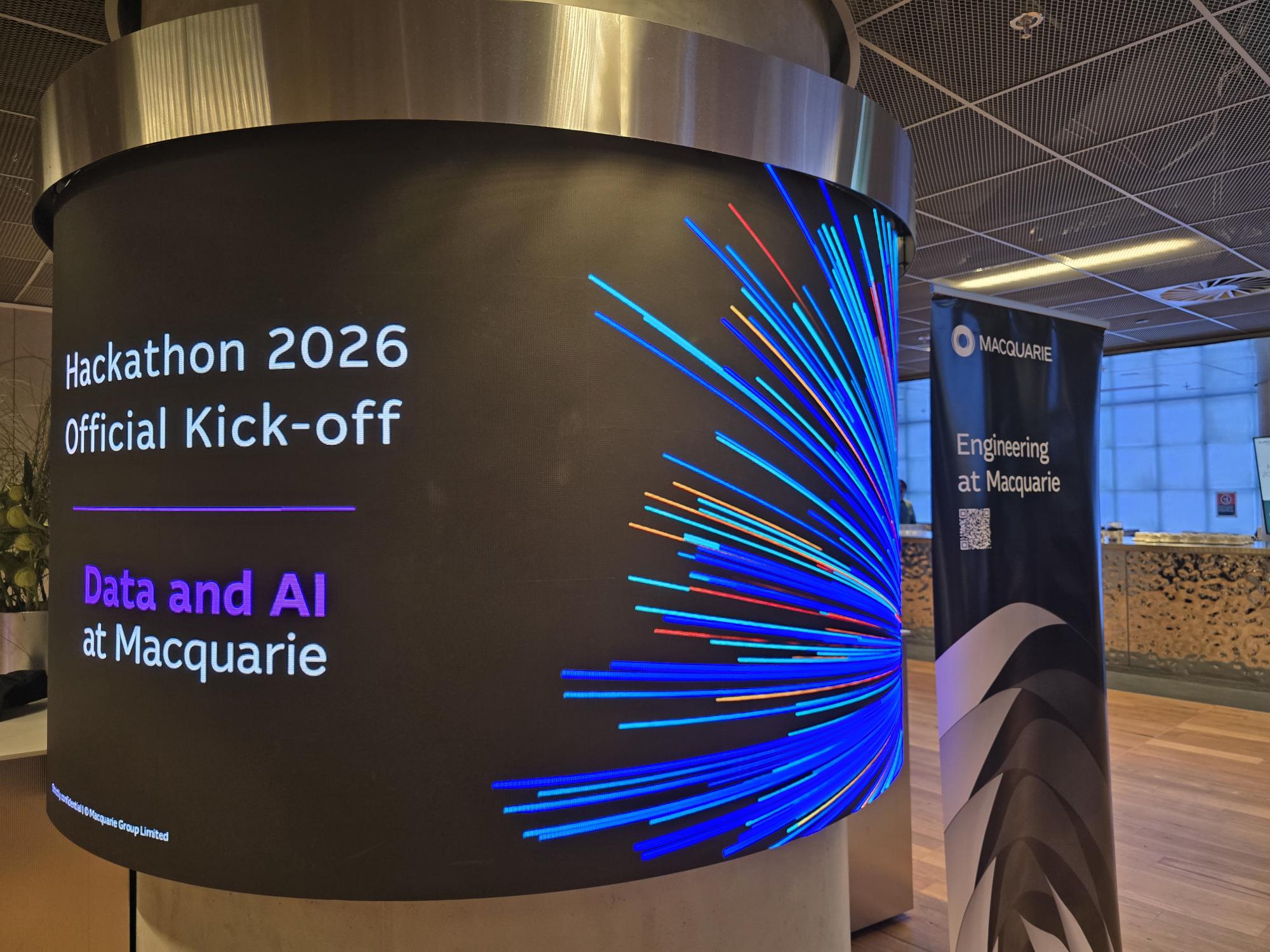
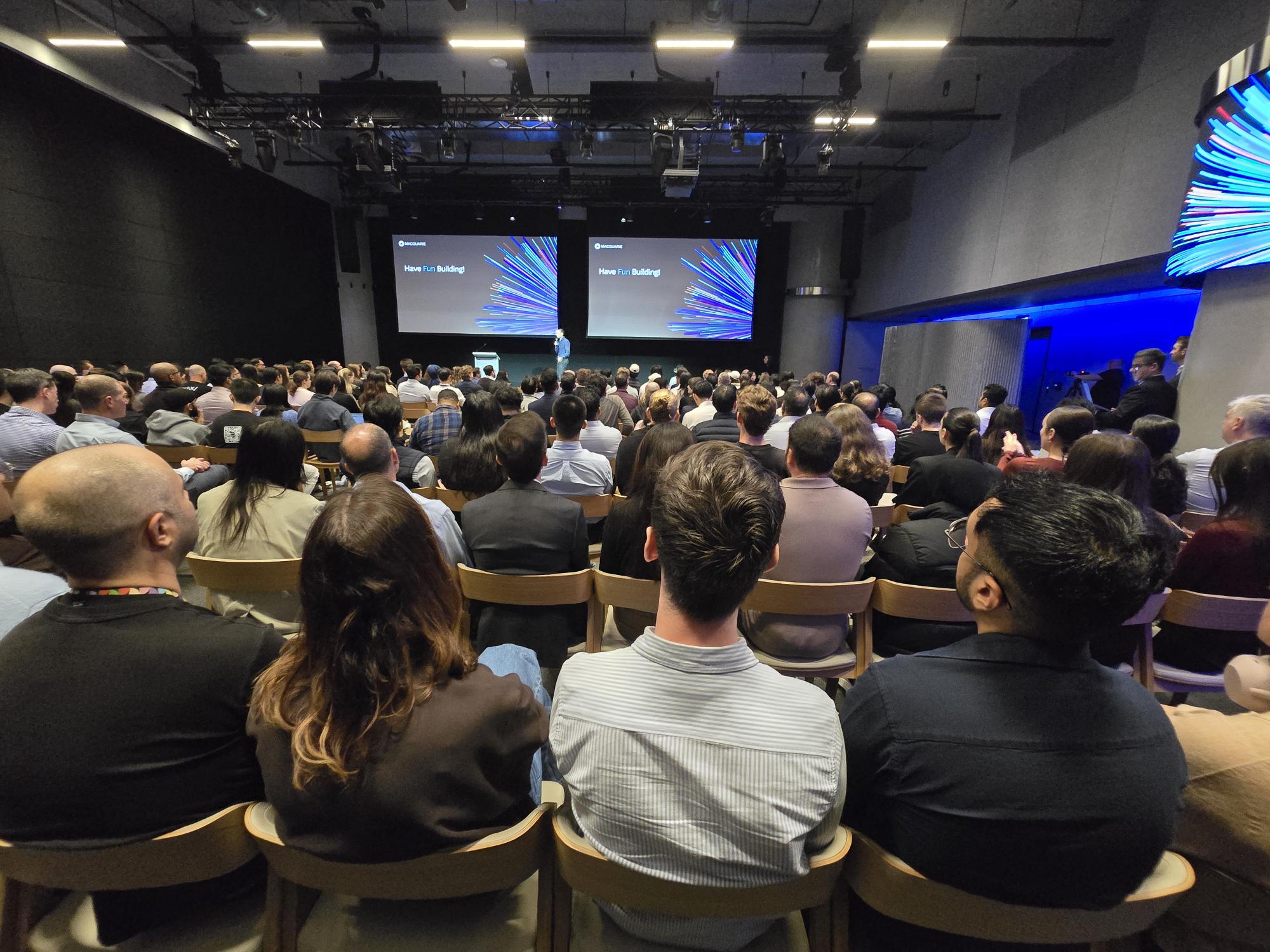
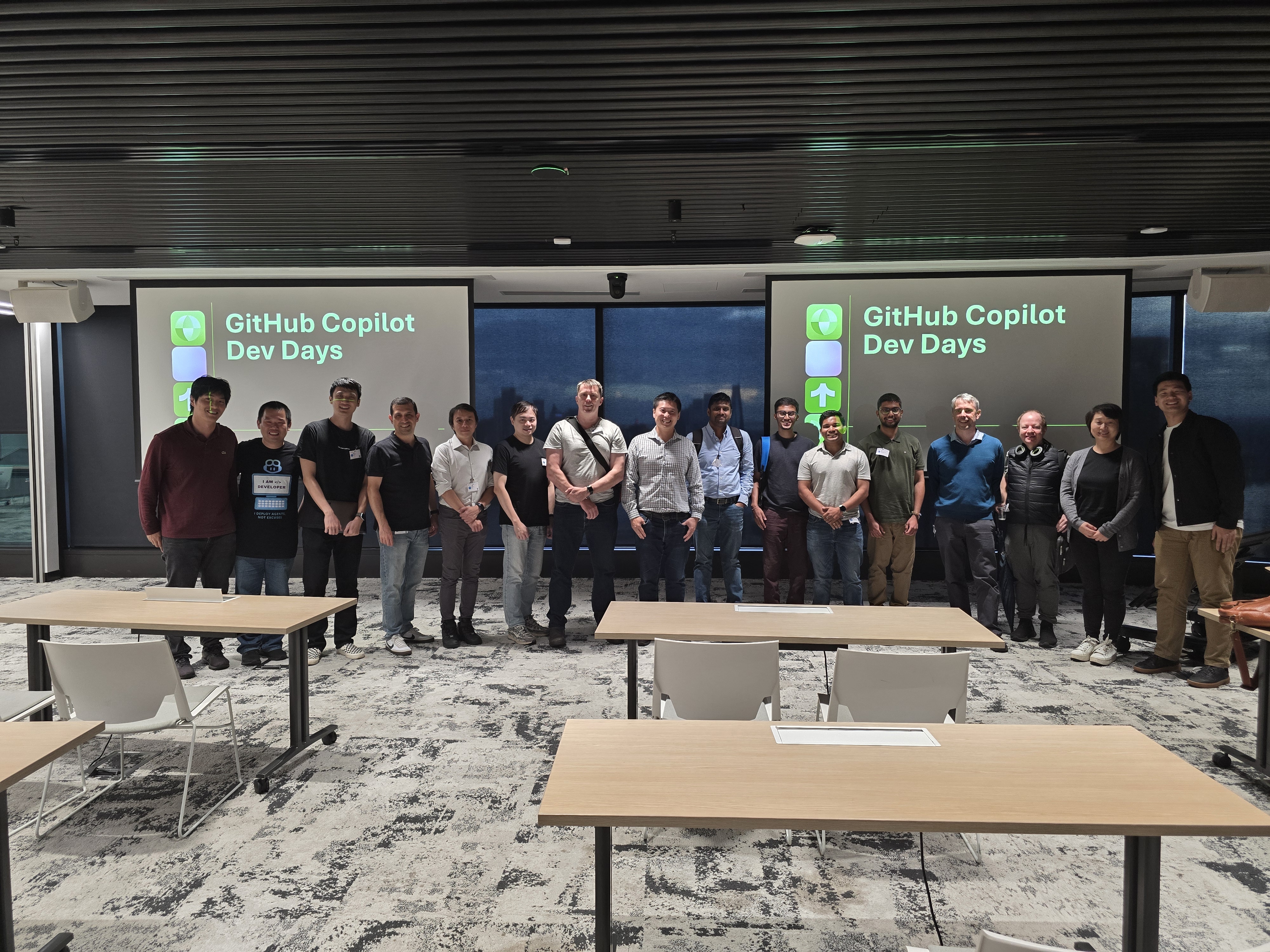
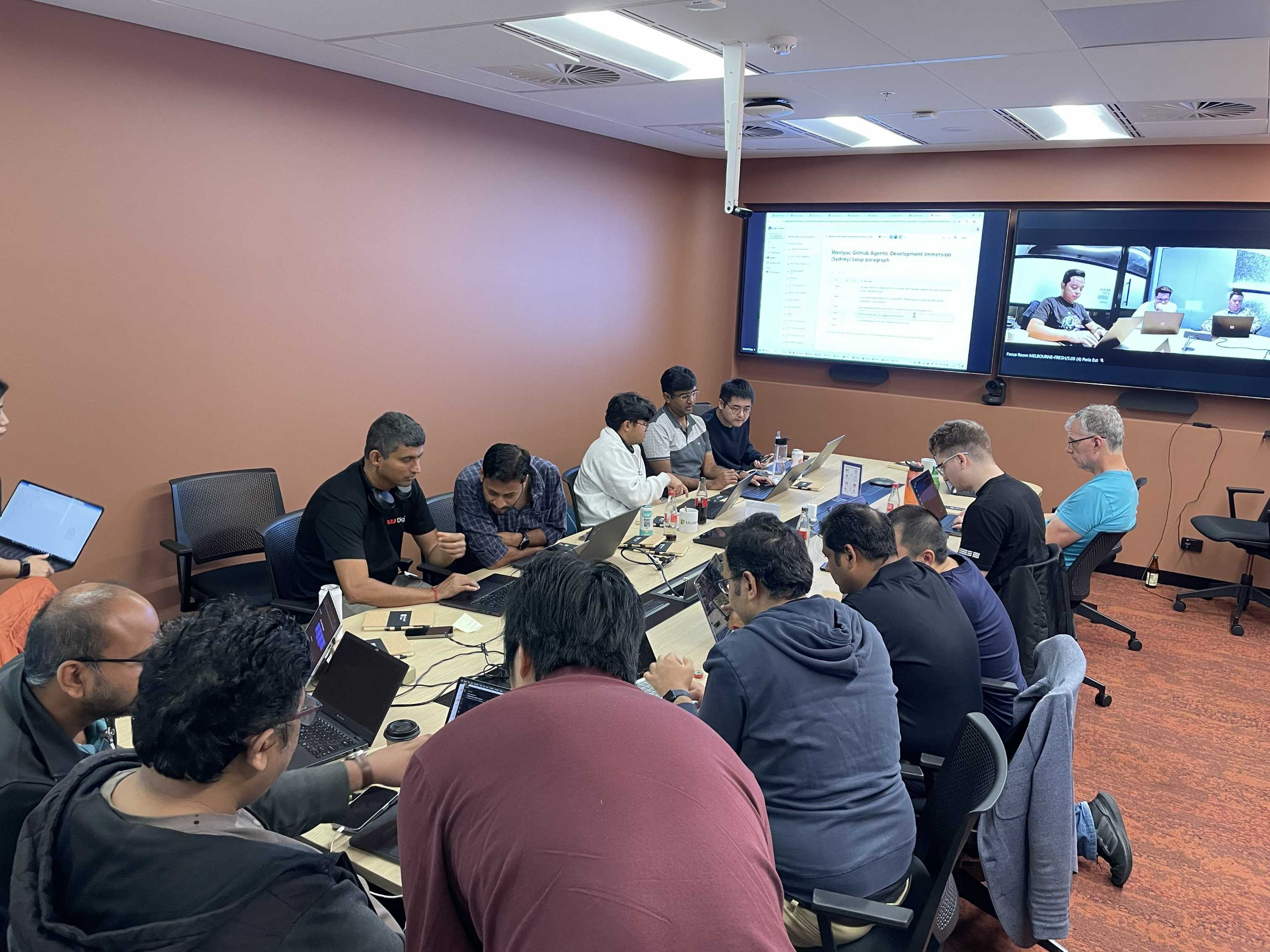
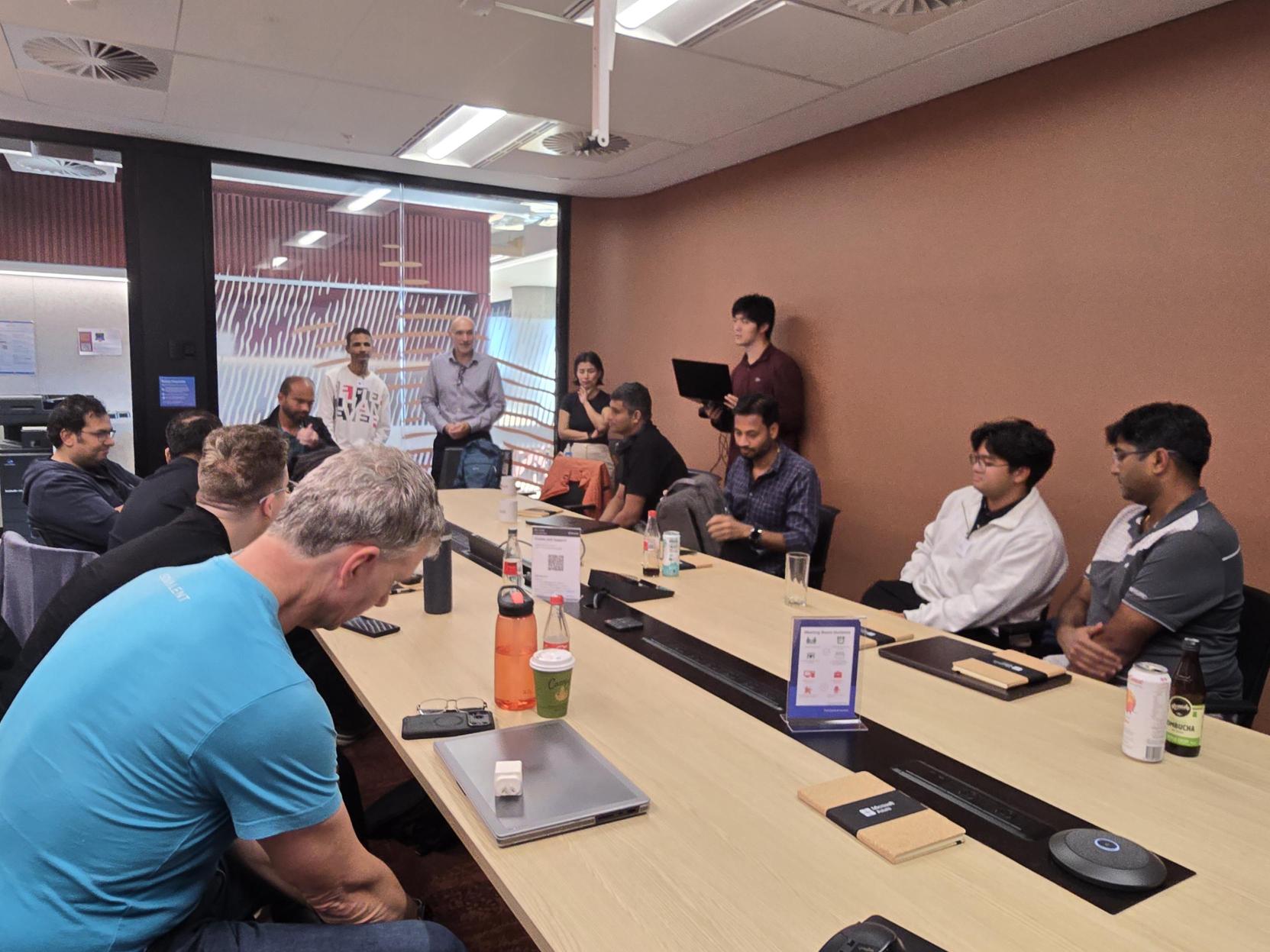
Customer-identifiable references shown only where public approval exists. Photos used with consent.
I’m a pre-sales solutions engineer based in Sydney. Day to day I sit between enterprise engineering leaders, platform teams, and the AI tools they’re trying to put into production — translating ambition into running code.
The job is part architect, part operator, part facilitator. Pre-sales in the original sense of the word: I’m there before the contract, in the discovery, the technical evaluation, the proof-of-concept, the executive briefing, and the design partnership that follows. Field in the literal sense: I run the immersions, the workshops, the hackathons and the 200-seat keynotes where it’s settled whether an idea becomes a service.
I joined Microsoft in 2025 after five years at GitHub (2017–2022) and two years at LaunchDarkly (2022–2024), doing variants of the same craft — pre-sales, field, customer architecture — across developer platforms, safe delivery, and now AI. The arc has been deliberate: from helping open-source contributors ship better code, to helping platform teams ship safely with feature flags and progressive delivery, to helping enterprise crews ship AI for the first time. The audience changes; the test doesn’t.
Did the team leave with something they can run on Monday? — the only test I trust
Where I differ from a textbook field engineer is the product lens. I treat every customer immersion as discovery for a product I don’t yet own. Field signal — what worked, what didn’t, what the customer asked for that doesn’t exist yet — gets written down and sent back. A solid pre-sales engineer ships demos. A product-minded one ships insight.
I show up to be useful. Whether it’s a two-day immersion for a tier-one bank, a hackathon keynote for 200+ engineers, or a 60-minute architecture review that unblocks a stuck POC — the goal is the same: the team leaves with a working pattern, the company leaves with a smaller risk, and the product team leaves with one more piece of grounded evidence.
Six axioms that sit underneath every engagement. None of them are slogans; each one is something a previous engagement made me write down.
Anything that only works on Friday afternoon is theatre. Pre-sales demos that don’t deploy don’t count.
Every POC starts with a one-page rubric agreed with the customer. The rubric is the deliverable; the code is the proof.
What customers ask for, what blocks them, what they hack around — write it down, send it back to product with the evidence that makes it actionable.
If the room hasn’t pushed back, I haven’t earned the recommendation yet. Discovery first; demo when the question is sharp.
Immersions, workshops, briefings — the design problem is always the room first, the slides second, the code third.
Every reference architecture I leave behind ends with a working azd up or its equivalent. Diagrams that don’t become services are debt.
Three chapters, one through-line. Future chapters slot in here without restructuring anything else.
Pre-sales and field engineering for the Microsoft AI stack across ANZ. Enterprise AI immersions, GitHub Copilot adoption, Azure AI Foundry reference patterns, agentic developer workflows, and frontier-model rollout. Hackathon and Dev Day keynotes for audiences from 12 to 200+.
Pre-sales and field engineering across enterprise customers in ANZ adopting feature management at scale. Worked with platform teams, SRE crews and product engineering to make safe rollout, experimentation and progressive delivery the default — rather than a brave act.
Field and customer engineering on the developer platform itself. Five years working with open-source maintainers, platform teams, and enterprise customers as GitHub matured from source-control to a full developer platform — including the first generations of Copilot. The discipline I run today was forged here.
Software engineering across edtech and Australian civic projects — from a successful educational application to community-facing builds with NSW government. The places I learned to take vague briefs from non-technical stakeholders and ship something usable.
Full history on LinkedIn.
Each starts with a discovery conversation, ends with running code your team can extend, and leaves the product team one customer-grounded data point richer.
Take an opportunity from RFI to signed POC with a demo that survives scrutiny. Discovery, scoring rubrics, working code, hand-off plan.
From whiteboard to reference architecture with cost, security and evaluation built in — the IaC that turns a diagram into a deploy.
Compress a quarter of learning into a day. Enterprise immersions, hackathons, executive briefings, dev days — designed around the room, not the slides.
The PM-adjacent muscle. Turn customer evidence into structured product input — the kind product teams can act on without translation.
A sample of recent engagements, abstracted to vertical and shape. Named references provided on request, where public approval exists.
Numbers and verticals are accurate; customer identities are abstracted unless explicit approval exists.
I speak best when the audience can ask follow-ups. Keynotes, technical demos, panels and facilitation across vendor, partner and community events in Australia.
Short, opinionated write-ups on what worked — the playbooks, patterns and small builds behind the engagements.
Auto-generated evaluators, trace-linked analysis, adaptive red-teaming — moving multi-agent systems from prototype to production with Foundry Observability.
Read on GitHub →Inspect execution traces, define “good behaviour” with evaluation graders, and apply RFT to reinforce better decisions — without redesigning the agent.
Read on GitHub →Customise Copilot across CLI and VS Code — plugins, hooks, agents, skills, instructions, prompts and MCP servers. Practical patterns you can drop into your codebase.
Read on GitHub →Build a RAG FAQ assistant with Azure SQL vector search, mirror operational data into Fabric OneLake, govern with Purview, orchestrate with Foundry Agents.
Read on GitHub →Discovery, success criteria, weekly cadence, demo script, and the readout that makes the next decision easy.
DraftingA lightweight template for converting customer engagements into product input that engineering teams can act on.
DraftingPick the shape that matches where you are. I’ll always start with a free 30-minute working session to make sure the engagement is set up to succeed.
One topic, one whiteboard. Architecture review, demo prep, RFP technical input, or unsticking a stuck POC.
60 min · single sessionDiscovery → success criteria → working code → readout. The full pre-sales arc, instrumented end to end.
2–6 weeks · scopedIdea → prototype with your team driving the keyboard. Cohort programs and executive briefings included.
1–3 days · cohortKeynotes, technical demos, panels, internal enablement, customer advisory board facilitation.
half-day → multi-dayThe fastest way to start is a 30-minute working session. Bring a real problem — we’ll leave with a sketch of the next two weeks.
Built with the same patterns I trust in production — observable from day one, secured by managed identity, cheap to run. Azure today, because that’s where I do my deepest work.
Reference repo: github.com/xavierxmorris